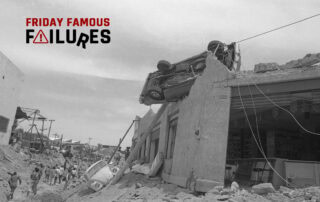
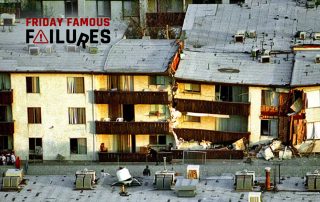
The Northridge Meadows Apartment Collapse: When the First Story Became the Failure Plane
Explore the engineering failures behind the Northridge Meadows apartment collapse and the seismic lessons involving soft-story buildings and load paths.





Explore the engineering failures behind the Northridge Meadows apartment collapse and the seismic lessons involving soft-story buildings and load paths.
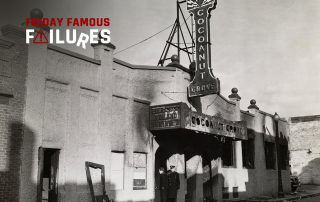
The Cocoanut Grove fire remains one of the most important fire and life-safety disasters in American history because it revealed how quickly ordinary building features can become fatal under emergency conditions
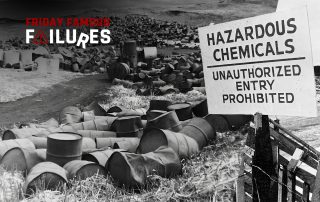
Love Canal remains one of the most important environmental engineering disasters in American history because it showed that hazardous waste does not disappear when it is buried.
NASA’s Mars Climate Orbiter was lost during Mars orbit insertion after a unit-conversion mismatch between ground software systems caused navigation errors. The failure remains one of engineering’s most important lessons in interface verification, systems communication, and unit consistency.
NASA’s Mars Climate Orbiter was lost during Mars orbit insertion after a unit-conversion mismatch between ground software systems caused navigation errors. The failure remains one of engineering’s most important lessons in interface verification, systems communication, and unit consistency.
The 1973 Skyline Plaza collapse is a defining case study in construction-stage failure, where premature shoring removal, insufficient concrete strength, and sequencing errors led to a progressive collapse. This article examines the root causes and key lessons for professional engineers.
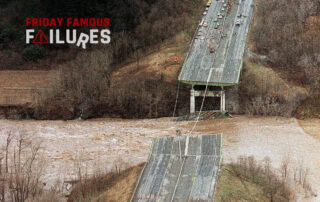
The 1987 Schoharie Creek Bridge failure was not caused by material failure or structural overload. It resulted from foundation loss driven by hydraulic scour—a mechanism that was not fully appreciated at the time of design
The 1993 Milwaukee water contamination was not caused by a single design flaw or mechanical breakdown. It resulted from a combination of inadequate pathogen barriers, limited monitoring capability, and delayed operational response within a system that appeared compliant and functional by regulatory standards.
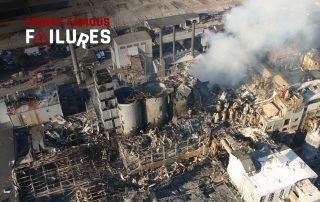
On April 22, 1992, a series of underground explosions ripped through the Reforma sector of Guadalajara, Mexico’s second-largest city. Over the course of roughly an hour, at least ten powerful blasts traveled along the main sewer collector, tearing open more than 8 km of streets, destroying blocks of homes and businesses, and killing over 200 people.
Tay Bridge Disaster: A catastrophic Victorian-era bridge collapse and a stark reminder of structural engineering challenges. Learn more.