





Engineering was practiced long before it was respected in academia. What changed was not the work itself, but the moment institutions were forced to take it seriously.
Long before universities embraced engineering, the United States was already being shaped by it. Roads were carved through wilderness, canals connected distant regions, and fortifications protected a young and uncertain nation. The people responsible for this work were solving complex, technical problems every day.
Yet for much of the country’s early history, their knowledge existed outside the boundaries of what colleges considered worthy of formal study. The story of how engineering became an academic discipline is about recognition. It is about how a field that proved its value in practice slowly earned legitimacy in theory.
Engineering Training and Feats before Collegiate Legitimization
In the early decades of the United States, engineering was defined by necessity. There were no established pathways to become an engineer, no widely accepted degrees, and no standardized curriculum. Instead, knowledge was gained through experience, mentorship, and direct engagement with real-world challenges. Much of this early training took place in military contexts.
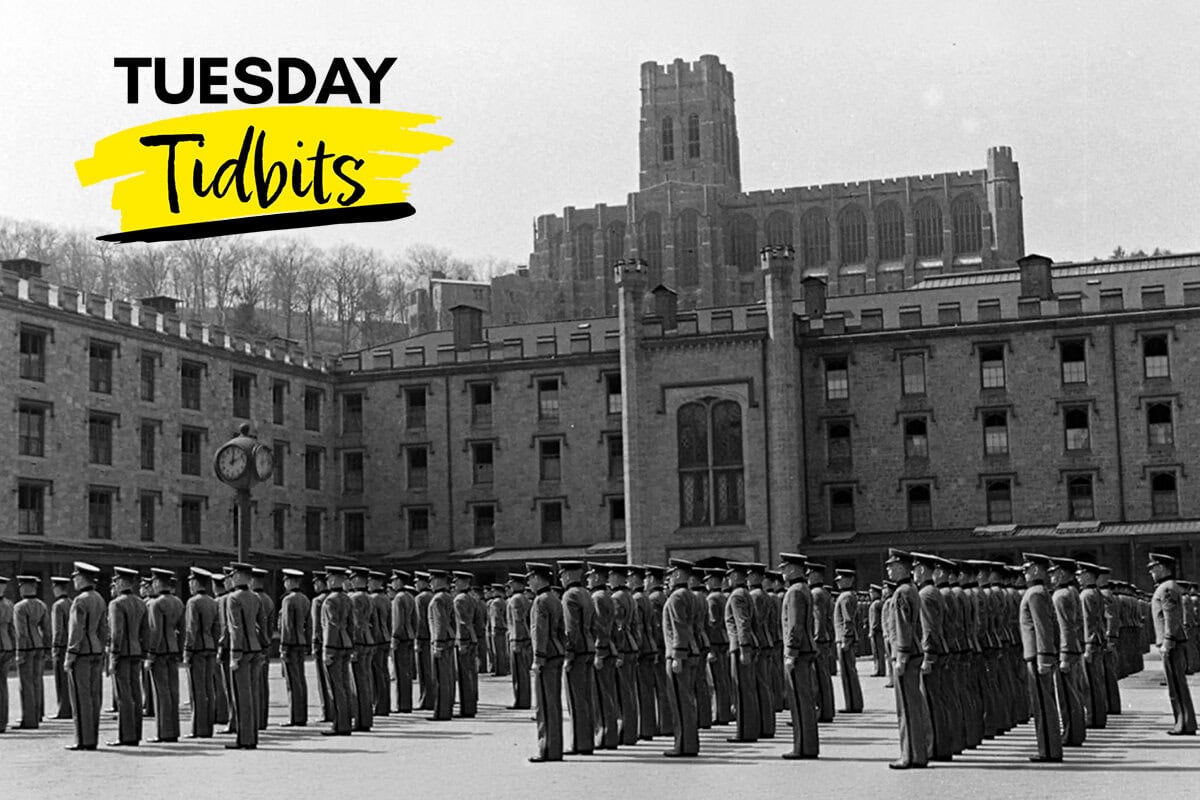
The United States Military Academy at West Point became one of the first places where technical instruction was organized in a systematic way. Students studied mathematics and mechanics, then applied those principles to surveying land and designing defensive structures. Even so, this was not engineering education as we think of it today. It was training for specific purposes, rooted in immediate national needs.
Outside the military, engineers learned by doing. Surveyors mapped expanding territories, builders constructed early transportation systems, and craftsmen developed techniques through repetition and adaptation. These individuals were responsible for some of the most ambitious projects of the era, including canal systems and early rail infrastructure. Their work required precision, creativity, and problem-solving ability, yet it rarely translated into academic recognition.
There is an irony in this period. Engineers were essential to the nation’s growth, but their expertise was often treated as practical knowledge rather than intellectual achievement. The structures they built stood as evidence of their capability, even as institutions hesitated to formally acknowledge it.
Early Skepticism from Traditional Universities
Part of the challenge came from the nature of higher education itself. In the early 19th century, American colleges were modeled after classical European traditions. Their curricula emphasized subjects like Latin, Greek, philosophy, and theology. These disciplines were seen as the foundation of an educated mind, while practical pursuits were often viewed as secondary. Engineering did not fit neatly into this framework.
It was applied, hands-on, and closely tied to industry and labor. For many academic leaders, this made it seem less like a scholarly discipline and more like a technical trade. The idea that engineering belonged in a university setting was, at best, unfamiliar and, at worst, controversial.
Even when technical subjects were introduced, they were often framed as extensions of mathematics or natural philosophy rather than as a distinct field. Students might learn calculus or physics, but the application of that knowledge to building bridges or designing systems was not always treated as worthy of academic focus. This skepticism had real consequences. It limited the development of formal programs and delayed the creation of dedicated resources, including textbooks and standardized courses.
Engineers, despite their growing importance, operated in a space that was academically undefined.
At the same time, the country was changing. Expansion, industrialization, and infrastructure demands were accelerating. The gap between what universities taught and what the nation needed was becoming harder to ignore.
The Morrill Act as a Legitimizing Force
The turning point came not from within universities, but from outside them. In 1862, during the Civil War, the Morrill Land-Grant Act was signed into law. It marked a significant shift in how higher education was conceived in the United States. The Act provided federal land to states to fund colleges, with the stipulation that these institutions teach agriculture and the mechanic arts. This phrase, broad as it was, carried profound implications. It signaled that practical, technical knowledge deserved a place alongside traditional academic subjects.
For engineering, this was a moment of institutional validation. It did not create the field, but it gave it legitimacy within higher education. Universities that had once focused primarily on classical studies were now required to incorporate technical instruction. Engineering began to move from the margins into the mainstream.
The impact was gradual but far-reaching. New schools were established, existing institutions expanded their offerings, and engineering programs became more structured. Students could now pursue technical education in a formal setting, supported by resources and faculty dedicated to the field. It is worth noting that this shift did not happen overnight.
Resistance persisted in some quarters, and the balance between theory and practice continued to evolve. Still, the Morrill Act created a foundation that could not easily be undone. It aligned education with the needs of a changing nation, and in doing so, it elevated engineering to a new level of recognition.
The Rise of Infrastructure as a Driver of Change
If legislation opened the door, infrastructure demands pushed it wide open. In the decades following the Morrill Act, the United States experienced rapid growth. Railroads stretched across the continent, cities expanded, and industries scaled at an unprecedented pace. Each of these developments required skilled engineers who could design, build, and maintain complex systems.
This surge in demand reshaped both the profession and its place in academia. Engineering was no longer a peripheral activity; it was central to economic progress and national development. Universities, responding to this reality, continued to refine and expand their programs.
As the field matured, it also began to develop a clearer identity. Professional societies formed, standards emerged, and knowledge became more systematically organized. Textbooks started to appear that reflected not just isolated practices, but cohesive bodies of theory and application.
What had once been learned primarily through experience was now being codified and taught.
Engineering, in effect, completed its transition from a practice-driven craft to an academically recognized discipline. There is a sense in which the engineers of earlier generations had already proven the value of their work. The bridges stood, the railways functioned, and the systems they created supported a growing nation. What changed in the late 19th century was not the quality of their contributions, but the willingness of institutions to acknowledge them.
Conclusion
The recognition of engineering as an academic discipline in the United States was not the result of a single declaration or moment of consensus. It was the outcome of sustained pressure, driven by necessity and validated by results. For decades, engineers operated without formal academic standing, even as their work shaped the country in fundamental ways. When universities finally adapted, they were responding to a reality that had already been established in the field. This history offers a subtle but important perspective. Disciplines are not always born in lecture halls. Sometimes, they are built in the world first, then brought into the classroom later. Engineering did not need academia to exist, but once it was recognized, both were transformed.

Leave A Comment